
How to Choose a Lithium Charge Controller for Solar in 2026?
Choosing the right Lithium Charge Controller Solar system in 2026 requires more than matching voltage labels. Battery chemistry, charging limits, temperature, and daily energy demand all influence the decision. A controller that works well with one lithium battery may perform poorly with another.
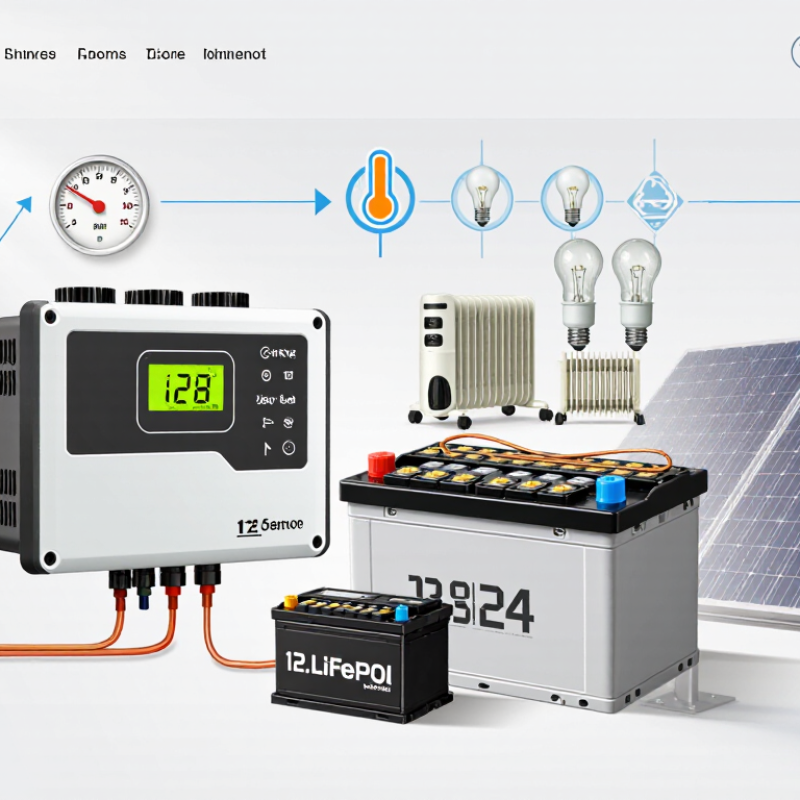
In practical installations, small details matter. A 12.8-volt LiFePO4 battery may need a different charging profile than a 24-volt battery bank. Cable length, connector quality, and enclosure ventilation also affect reliability. I have found that confusing rated current with actual operating current causes avoidable problems. The label is not the whole story.
This guide explains how to compare PWM and MPPT controllers, verify lithium-compatible settings, and assess protection features. It also considers Bluetooth monitoring, low-temperature charging control, load management, and future expansion. Manufacturer manuals and battery specifications should guide every final choice. Do not rely on generic presets alone.
Safety remains central. A suitable controller should prevent overcharging, overheating, reverse polarity, and excessive current when properly installed. Yet even good equipment cannot correct poor wiring or incorrect fusing. That part is often underestimated. Real-world performance also changes with shaded panels, winter temperatures, and irregular household loads.
Some recommendations may need revisiting as battery standards develop. That is worth admitting. The best choice in 2026 will not simply be the most powerful or expensive controller. It will be the one that matches the battery, solar array, environment, and user’s monitoring habits with measurable confidence.
Understanding Lithium Battery Charging Requirements for Solar Systems
Choosing a lithium charge controller begins with the battery, not the solar panel. Lithium batteries need a controlled voltage profile and a compatible charging algorithm. Their requirements differ from lead-acid batteries. A controller must match the battery chemistry, nominal voltage, and recommended charging voltage. Check the battery datasheet carefully.
The battery management system can disconnect charging during overvoltage, overheating, or low temperatures. This protection is useful, but repeated shutdowns may interrupt solar production. Select a controller with temperature-based charging limits and adjustable current settings. In cold conditions, many lithium batteries should not charge below freezing. A temperature sensor or internal cutoff can prevent damage. Small details matter.
Sizing also requires practical judgment. A 400-watt solar array may produce less energy during cloudy mornings or winter afternoons. The controller should handle the array’s maximum voltage and current, with reasonable safety margin. MPPT technology can improve energy harvest when panel voltage exceeds battery voltage. However, higher efficiency cannot fix incorrect settings. Set absorption duration, float behavior, and low-voltage limits according to the battery maker’s specifications. Some lithium batteries need little or no continuous float charging. Assuming every lithium battery behaves alike is an easy mistake. Reviewing actual charge data after installation can reveal problems that calculations miss.
Matching Controller Voltage, Current, and Battery Chemistry
How to Choose a Lithium Charge Controller for Solar in 2026?
Matching the controller to your battery voltage is the safest starting point. A 12V lithium battery usually needs a controller designed for its charging range, not merely its label. Check the battery manual for absorption and float settings. Many LiFePO4 batteries charge near 14.4V, while other lithium chemistries may require different limits. Never copy settings from a lead-acid system. That mistake can shorten battery life or trigger the BMS.
Current matters just as much. Calculate the solar array’s maximum output, then choose a controller with suitable input capacity and a reasonable safety margin. A 400W array on a 12V battery can produce over 30A in strong sunlight. Cable size, fuses, and battery discharge limits must support that figure. In real installations, shaded panels and cold mornings complicate the calculation. I would rather leave modest headroom than run a controller continuously at its limit. Perfect sizing on paper can be fragile outdoors.
Tips: Confirm the battery chemistry before programming anything. Check whether temperature compensation should be disabled, as many lithium batteries manage temperature internally. Verify the controller’s maximum solar voltage during the coldest expected conditions. Keep the BMS instructions nearby. A small mismatch may appear harmless, but repeated charging errors become expensive. Assess the system after installation, because real readings often challenge the original plan.
Comparing MPPT and PWM Charge Controller Performance
How to Choose a Lithium Charge Controller for Solar in 2026?
For lithium batteries, MPPT usually delivers stronger performance than PWM. PWM connects the panel near battery voltage, wasting available voltage during cool, bright conditions. MPPT converts extra voltage into useful charging current. An IEEE Access review published in 2021 reported practical MPPT energy gains of about 10–25%, depending on weather, panel voltage, and battery state. Real results vary.
That matters more in winter.
The IEA PVPS Trends in Photovoltaic Applications 2024 report recorded 456 GW of new solar capacity worldwide in 2023. Many newer modules operate at higher voltage, making MPPT a better technical match. Select a controller with a lithium charging profile, temperature protection, adjustable voltage limits, and documented conversion efficiency. IEC 62509 also provides a useful reference for evaluating photovoltaic charge-controller performance and functionality.
PWM can still suit a small, warm-climate system with a closely matched panel and battery. It costs less and has fewer conversion components. However, its energy loss may become visible when mornings are cold or sunlight changes quickly. I would not trust a claimed “30% gain” without test conditions. Panel temperature, cable length, shading, and battery voltage can change the outcome. Check measured efficiency at your actual charging voltage, not only the headline rating.
How to Choose a Lithium Charge Controller for Solar in 2026? - Comparing MPPT and PWM Charge Controller Performance
Typical performance ranges for properly configured lithium iron phosphate (LiFePO₄) battery systems
| Performance Dimension | MPPT Charge Controller | PWM Charge Controller | Practical Selection Guidance |
|---|---|---|---|
| Operating Principle | Continuously adjusts the solar array operating point to capture available maximum power, then converts the voltage to the battery charging voltage. | Connects and disconnects the solar array directly to the battery, pulling the panel voltage toward the battery voltage during charging. | MPPT for higher energy harvest |
| Typical Conversion Efficiency | Approximately 95%–99% under suitable operating conditions. | Approximately 75%–95%, depending strongly on panel voltage, battery voltage, temperature, and charging stage. | MPPT generally delivers more usable energy, especially in cooler or variable conditions. |
| Solar Energy Yield | Usually provides 10%–30% more daily energy than PWM when the array voltage is appropriately higher than the battery voltage. | Can perform adequately when the panel nominal voltage closely matches the battery bank voltage. | Choose MPPT where every watt-hour matters |
| Recommended Panel-to-Battery Voltage Relationship | Supports a wider range of array voltages, provided the controller's maximum PV voltage is not exceeded. | Panel operating voltage should closely match the battery charging voltage; excessive panel voltage is not efficiently converted. | MPPT offers greater flexibility for modern higher-voltage modules and longer cable runs. |
| Performance in Cold Weather | Good Can use the higher voltage produced by photovoltaic modules in cold conditions, subject to maximum PV input limits. | Limited Much of the panel's extra voltage is not converted into additional charging power. | Use MPPT in cold climates and verify the array's temperature-corrected open-circuit voltage. |
| Performance in Partial Shade or Variable Irradiance | Generally better at extracting available power when sunlight changes, although heavy or complex shading can still reduce output. | More likely to lose potential energy when panel voltage and battery voltage are poorly matched. | MPPT is usually preferable for rooftops, mixed weather, and changing shade conditions. |
| Suitability for LiFePO₄ Batteries | Very suitable when configured with lithium-compatible charging voltages, charge limits, and temperature protections. | Suitable only when the controller provides an appropriate lithium charging profile or can be configured correctly. | Neither topology is automatically lithium-safe; correct settings and battery protection remain essential. |
| Charging-Voltage Control | Provides regulated absorption, float, and often custom charging parameters; lithium systems commonly use a low or disabled float setting according to battery guidance. | May provide fewer adjustment options, though some modern units include selectable lithium profiles. | Prioritize adjustable charging voltage, charge duration, and lithium-specific settings. |
| Maximum PV Voltage Flexibility | Common residential and off-grid models often accept approximately 75–250 V DC, but the exact limit varies by model. | Commonly designed for lower-voltage arrays that closely match 12 V or 24 V battery systems. | Always compare the controller's absolute maximum PV open-circuit voltage with the coldest expected condition. |
| Typical System Size | Well suited to small, medium, and larger off-grid systems where energy recovery justifies added cost. | Best suited to small, cost-sensitive systems with short cables and closely matched panels. | For larger arrays, MPPT normally offers better expansion potential. |
| Cable Loss Management | Higher PV voltage can reduce array-side current and voltage drop, allowing more practical long cable runs. | Lower array voltage requires higher current for the same power, increasing voltage-drop sensitivity. | MPPT is generally easier to install when panels are far from the battery. |
| Power-Conversion Heat | Uses switching conversion and may produce heat at high current; adequate ventilation and derating are important. | Has simpler switching behavior and can generate less conversion heat, but wiring and current-related losses still apply. | Follow the controller's continuous current rating and installation clearances. |
| Typical Cost Position | Usually more expensive because of added power electronics, monitoring, and configuration features. | Usually less expensive and simpler for small, well-matched systems. | Compare total lifetime energy value rather than purchase price alone. |
| Maintenance and Monitoring | Often includes display, remote monitoring, historical energy data, and configurable protection functions. | Often has simpler indicators and fewer monitoring features, although advanced models may offer digital connectivity. | For unattended or critical systems, prioritize clear fault reporting and remote status access. |
| Key Protection Features | Look for overcharge, reverse-polarity, over-temperature, overcurrent, short-circuit, and battery low-voltage protections. | Should provide the same essential protections, but feature availability varies more widely between models. | Protection features matter more than topology |
| Best Overall Use Case | Higher-efficiency residential, mobile, backup, and off-grid systems; cold climates; long cable runs; and systems likely to expand. | Small, simple systems with short wiring, stable sunlight, a tightly matched panel, and a strict budget. | For most new lithium solar installations in 2026, MPPT is the more versatile default choice. |
Checking Safety Features, Compatibility, and Environmental Ratings
Choosing a lithium charge controller in 2026 starts with the battery, not the panel. A practical field check confirms chemistry, nominal voltage, charge ceiling, and BMS communication. LiFePO4 and NMC batteries do not share identical charging limits. The controller should stop charging during low-temperature conditions. Heating support may change that requirement. It also needs current limiting, reverse-polarity protection, short-circuit protection, and controlled fault recovery. These details matter as storage expands. The IEA’s Batteries and Secure Energy Transitions report estimates global battery demand reached 2,400 GWh in 2023.
Compatibility means more than matching voltage labels. Compare maximum PV open-circuit voltage, charging current, battery capacity range, grounding method, and communication protocol. Check performance during the coldest expected morning, not only at room temperature. IEC 62509 addresses photovoltaic power-conditioner performance and reliability. IEC 62619 covers safety requirements for industrial lithium secondary batteries. Certification helps, but test records and installation documentation still matter. Small oversight, costly failure.
Environmental ratings must fit the controller’s actual location. IP65 resists dust and water jets, but it does not prove flood resistance or salt-mist durability. Review operating temperature, humidity, altitude, UV exposure, and corrosion testing. IRENA’s Renewable Capacity Statistics 2025 recorded 452 GW of solar additions in 2024, increasing exposure to harsh outdoor conditions. A shaded, ventilated position may outperform a higher-rated unit against a hot metal wall. I would not treat a rating label as a complete environmental assessment. That shortcut is tempting. It is also incomplete.
How to Choose a Lithium Charge Controller for Solar in 2026?
Checking safety features, battery compatibility, and environmental ratings is essential before selecting a solar charge controller. The chart shows typical maximum charge-voltage targets per cell for common lithium-ion chemistries.
Choose a controller that supports the battery chemistry and series-cell voltage of the battery pack. Confirm lithium-specific charging profiles, BMS communication or protection compatibility, over-current and over-temperature protection, reverse-polarity protection, low-temperature charging control, and suitable IP protection for the installation environment. Actual charge settings must always follow the battery manufacturer’s specifications.
Evaluating Installation Needs, Monitoring Options, and Long-Term Value
How to Choose a Lithium Charge Controller for Solar in 2026?
Selecting a lithium charge controller starts with installation realities, not advertised capacity. Match battery voltage, charging current, temperature limits, and load peaks. Lithium batteries need accurate absorption settings and low-temperature charging protection. In real installations, cable distance often causes unexpected voltage loss. Leave space for ventilation, fuses, disconnects, and future battery expansion. The IEA’s Renewables 2024 report says global energy storage capacity may need to grow sixfold by 2030. That makes scalable installation planning increasingly important.
Monitoring also affects long-term value. Choose a controller with clear local readings, reliable remote access, and useful alarms. Track voltage, current, battery temperature, charging stages, and historical energy flow. A colorful application is not enough. Data must help diagnose shading, loose connections, or declining capacity. NREL’s 2024 Annual Technology Baseline models lithium-ion storage round-trip efficiency near 85%. Small efficiency losses can become meaningful over thousands of cycles. Review warranty conditions, firmware support, replacement costs, and standby consumption before comparing prices.
Tips: Measure the real cable run. Check cold-weather limits. Keep manual access. Avoid sizing for perfect weather. One assumption will be wrong. I would prioritize serviceability over excessive features, especially for remote cabins or rooftop systems. A controller that is easy to inspect may deliver more value than one with advanced analytics. Also, record initial settings and monthly performance. That simple habit creates evidence when troubleshooting or evaluating system aging.