
What Is a Li Polymer Battery and How Does It Work?
A Li-Polymer battery is a rechargeable lithium battery designed with a polymer-based electrolyte and a flexible pouch structure. It powers smartphones, drones, tablets, wearable devices, and many compact electronic products. Unlike traditional cylindrical batteries, its shape can be customized more easily. That flexibility is useful when engineers have very little space.
Inside the cell, lithium ions move between the negative electrode and positive electrode through the electrolyte. During charging, an external power source drives the ions toward the negative electrode. During use, the ions travel back while electrons flow through the device’s circuit. This controlled movement creates the electrical energy that runs the product. The battery management system monitors voltage, temperature, and current. It helps reduce risks caused by overcharging, deep discharge, or overheating.
The term “polymer” can be misleading. Many Li-Polymer designs still use a gel-like electrolyte rather than a completely solid material. Battery performance also depends on chemistry, manufacturing quality, age, temperature, and charging habits. A thin pouch cell may feel lightweight and efficient, but it can swell or become damaged if abused. That point deserves attention.
Reliable battery knowledge comes from manufacturer specifications, laboratory testing, and safe handling practices. Real-world use is less tidy than a diagram suggests. A battery may lose capacity in cold weather or degrade faster under frequent high-power loads. Understanding how a Li-Polymer battery works helps users choose suitable chargers, recognize warning signs, and use modern portable electronics more responsibly.
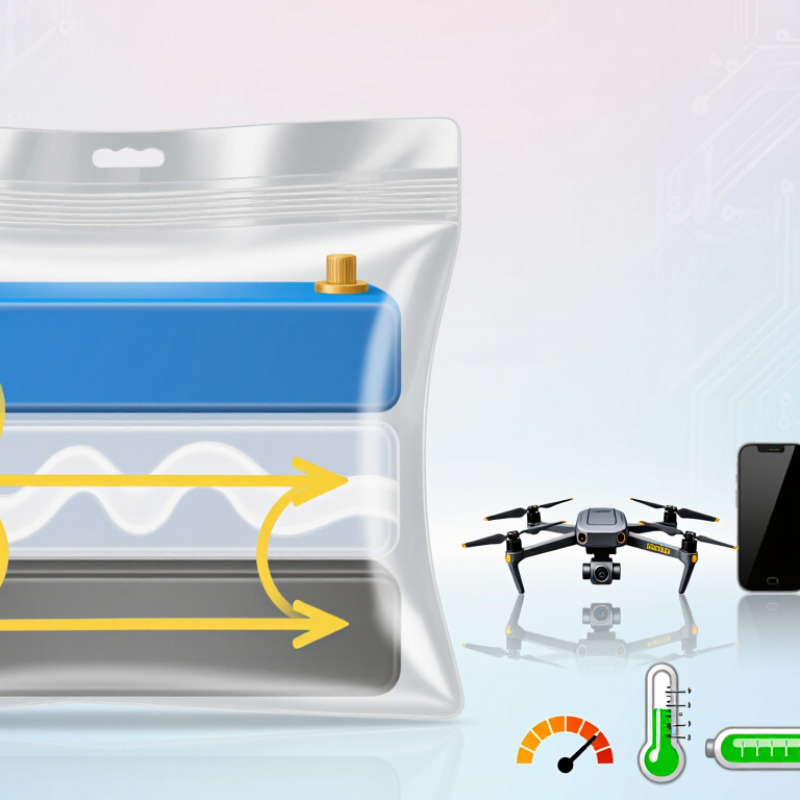
What Is a Lithium Polymer Battery?
A lithium polymer battery is a rechargeable lithium-ion cell using a polymer-based electrolyte. It is often built in a soft pouch rather than a rigid metal case. The term is slightly misleading. Most lithium polymer cells still contain liquid or gel electrolyte, not a completely solid electrolyte.
Inside, lithium ions travel between the cathode and anode during charging. They return through the electrolyte during use. Electrons move through the external circuit and power the device. A thin separator prevents direct contact between the electrodes. This structure allows manufacturers to create slim, curved, or custom-shaped battery packs.
The format has practical benefits. It can reduce unused space in compact electronics and support high discharge rates. However, its pouch may swell after damage, aging, heat exposure, or overcharging. It needs protection circuitry and careful charging control.
Small details matter.
Industry data shows the wider lithium-ion market is expanding rapidly. The International Energy Agency reported more than 750 gigawatt-hours of electric-vehicle battery demand in 2023.
BloombergNEF recorded an average lithium-ion pack price of 139 dollars per kilowatt-hour in its 2023 survey.
These figures do not represent lithium polymer cells alone, but they show the scale and cost pressure affecting related technologies.
In daily use, users should avoid crushing, puncturing, or charging a visibly swollen pack. A polymer electrolyte does not make a battery risk-free.
That assumption needs reconsideration. Proper design remains more important than the label.
What Materials and Components Make Up a Li Polymer Battery?
A lithium polymer battery is built from several thin, carefully matched layers. Its cathode contains a lithium-based metal oxide, while the anode commonly uses graphite or a silicon-carbon blend. A polymer electrolyte, often gel-like rather than fully solid, carries lithium ions between these electrodes. It is flexible, but not magical.
Inside the cell, a porous separator keeps the electrodes apart and allows ions to pass through. Aluminum foil supports the cathode, and copper foil supports the anode. Conductive additives improve electron flow, while binders hold active particles against the foils. A soft pouch, sealed tabs, and a protection circuit complete the structure. During charging, lithium ions move into the anode. During use, they travel back to the cathode and release electrical energy through the external circuit. The chemistry sounds simple, yet heat, pressure, and aging can change its behavior. The “polymer” label can also mislead readers because many cells still use liquid or gel components.
Tips: Check the cell’s voltage, capacity, connector, and physical size before installation. Avoid swelling, crushed pouches, or damaged insulation. A protective circuit should match the battery’s chemistry and cell count. Do not rely on appearance alone; a healthy-looking pouch may still have internal damage. Trade-offs remain. Higher energy density can bring greater sensitivity to heat and overcharging.
How Does a Li Polymer Battery Store and Release Energy?
A lithium polymer battery stores energy through reversible lithium-ion movement. Its layered cell usually contains a graphite anode, a lithium-based cathode, a separator, and a polymer-based electrolyte. During charging, an external power source pulls lithium ions from the cathode. The ions travel through the electrolyte toward the anode. Electrons take a different route through the charging circuit. They accumulate in the anode, creating stored chemical energy.
During use, the process reverses. Lithium ions move back toward the cathode through the electrolyte. Electrons flow through the device’s circuit, powering a screen, motor, or sensor. The separator prevents direct contact between the electrodes. That small barrier matters. A damaged separator can create serious safety risks. Flexible pouch packaging also saves space, but it needs careful mechanical protection.
Industry data shows why this chemistry remains important. The International Energy Agency reported that average lithium-ion battery pack prices fell 14% in 2023, reaching about $139 per kilowatt-hour. This figure covers lithium-ion batteries broadly, not lithium polymer cells alone. Still, it reflects improving manufacturing efficiency across the battery sector. Actual performance depends on temperature, charging speed, electrode materials, and cell age. A battery may feel powerful at room temperature, then lose capacity in winter. My own practical view is cautious: energy storage is not just a chemistry problem. Design, monitoring, and everyday handling matter just as much.
What Are the Main Types and Designs of Li Polymer Batteries?
A lithium polymer battery, often called a LiPo battery, stores energy through lithium ions moving between two electrodes. Its polymer-based electrolyte can be flexible, lightweight, and shaped more freely than traditional cylindrical cells. However, “polymer” can be misleading. Many commercial LiPo cells use a gel-like electrolyte rather than a completely solid material.
The main electrolyte types include gel polymer, solid polymer, and composite polymer designs. Gel polymer cells usually provide better room-temperature performance and are common in portable electronics. Solid polymer cells improve leakage resistance, but some require careful temperature control. Composite designs combine polymer materials with ceramic or liquid components, aiming to balance safety, conductivity, and flexibility.
The physical design also changes performance. A pouch cell uses a thin, sealed aluminum-laminate case. It can fit neatly into slim devices, but swelling becomes easier to notice. Inside, electrodes may be stacked in flat layers or wound into a compact roll. Stacked designs often use space efficiently, while wound designs can support faster manufacturing.
Cells can work alone or form packs. Series connections raise voltage, while parallel connections increase capacity and current capability. A protection circuit monitors voltage, temperature, and charging limits. It is essential, not optional. Even a carefully designed cell may degrade after heat exposure, deep discharge, or physical damage. The terminology is still imperfect, so technical specifications deserve more attention than the word “polymer” alone.
What Are the Benefits, Limitations, and Safety Considerations?
A lithium polymer battery is a rechargeable lithium-ion battery with a polymer-based electrolyte. Many versions use a flexible pouch instead of a rigid metal case. This design allows unusual shapes and lower weight. It also supports high power delivery in compact devices. In practical engineering, careful voltage monitoring remains essential. A thinner battery is not automatically a better battery.
The benefits are clear in portable equipment. Li polymer cells can fit narrow spaces and reduce unnecessary structural weight. They often provide strong short-term output for demanding electronics. However, capacity gradually falls with repeated charging, heat exposure, and high current use. Manufacturing can also cost more than conventional cylindrical cells. The polymer label sometimes creates confusion. Most commercial cells still contain liquid or gel electrolyte, rather than being completely solid.
Safety depends heavily on handling and design. Use a compatible charger with accurate voltage control. Stop using the cell if it swells, leaks, smells unusual, or becomes unusually hot. Never puncture, crush, bend, or dismantle a pouch cell. Keep it away from flames, direct sunlight, and loose metal objects. A protective circuit should limit overcharging, over-discharging, and excessive current. Professional testing should include temperature checks, insulation checks, and controlled charging cycles. Storage requires a cool, dry location and partial charge. Small mistakes matter. Disposal should follow local battery-recycling guidance, not household waste.
What Is a Li Polymer Battery and How Does It Work? - Benefits, Limitations, and Safety Considerations
| Data Dimension | Typical Value or Characteristic | How It Works or What It Means | Practical Consideration |
|---|---|---|---|
| Battery Type | Rechargeable lithium-ion battery | A lithium polymer battery, commonly called a LiPo battery, is a lithium-ion cell that usually uses a polymer-based or gel-like electrolyte and a flexible pouch enclosure. | It is not a completely different electrochemical family from other lithium-ion batteries. |
| Main Cell Components | Cathode, anode, separator, electrolyte, and current collectors | The cathode stores lithium in the charged state, while lithium ions move through the electrolyte and separator between the electrodes during charging and discharging. | The separator helps prevent direct contact between the electrodes and reduces the risk of an internal short circuit. |
| Energy Storage Mechanism | Reversible movement of lithium ions | During discharge, lithium ions move from the anode to the cathode while electrons travel through the external circuit. During charging, the process reverses. | The battery powers a device through the flow of electrons in the external circuit. |
| Nominal Voltage | Approximately 3.6–3.7 V per cell | Nominal voltage is an average operating voltage, not the maximum or minimum voltage of the cell. | Multi-cell battery packs connect cells in series to increase voltage. |
| Typical Full-Charge Voltage | Approximately 4.2 V per cell | Many conventional lithium-ion chemistries are charged to about 4.2 V per cell, although the exact limit depends on the cell chemistry and design. | Charging above the specified limit can cause overheating, accelerated aging, or a safety event. |
| Typical Discharge Cutoff | Often about 2.5–3.0 V per cell | The cutoff voltage is selected by the battery manufacturer and protection system to prevent excessive discharge. | Repeated over-discharge can permanently reduce capacity or make the cell unsafe to recharge. |
| Energy Density | Commonly about 150–250 Wh/kg at cell level | Energy density varies significantly with electrode chemistry, cell format, design, and manufacturing method. | Higher energy density can provide longer runtime at the same weight, but it does not automatically mean better safety or cycle life. |
| Shape and Packaging | Thin, lightweight, flexible pouch format | The pouch enclosure allows manufacturers to create customized shapes and use space efficiently inside compact devices. | The pouch is more vulnerable to puncture, crushing, swelling, and mechanical damage than a rigid metal can. |
| Power Capability | Moderate to very high, depending on cell design | Power capability is affected by internal resistance, electrode design, temperature, state of charge, and the permitted charge or discharge rate. | A battery should only be operated within its specified continuous and peak current limits. |
| Charging Method | Constant-current / constant-voltage charging | The charger first supplies a controlled constant current, then maintains the voltage while the current gradually decreases. | Use a charger designed for the correct cell count, chemistry, voltage limit, and charging current. |
| Cycle Life | Often about 300–1,000 full cycles | Actual cycle life depends on depth of discharge, temperature, charging speed, storage conditions, and the battery’s chemistry and construction. | Partial cycling, moderate temperatures, and avoiding prolonged storage at full charge can help reduce aging. |
| Primary Benefits | High energy-to-weight ratio and flexible form factor | LiPo batteries can be thin, lightweight, and shaped to fit products where cylindrical or rigid cells would be inefficient. | They are commonly suitable for portable electronics, compact equipment, and other space-constrained applications. |
| Other Benefits | Low self-discharge and high operating efficiency | Modern lithium-ion cells generally retain charge better during storage than many older rechargeable battery technologies and can deliver efficient energy conversion. | The battery still loses charge over time and should be stored according to the manufacturer’s guidance. |
| Key Limitations | Sensitive to overcharge, over-discharge, heat, and physical damage | Abnormal electrical or mechanical conditions can damage internal layers, increase resistance, and create unsafe reactions. | A protection circuit or battery management system is normally required in the finished product. |
| Swelling Risk | Possible during aging, abuse, or internal degradation | Gas generation inside the pouch can cause the cell to expand. Swelling may result from overcharge, overheating, physical damage, or normal long-term aging. | Do not puncture, compress, bend, or continue using a visibly swollen battery. |
| Operating Temperature | Often approximately 0–45°C for charging and −20–60°C for discharge | The exact allowable range varies by cell design. Charging below freezing can cause lithium plating and permanent damage in many cells. | Avoid charging or using the battery in extreme heat, freezing conditions, or direct sunlight. |
| Thermal Runaway | A low-probability but serious failure condition | Severe overheating, internal short circuits, overcharge, or mechanical damage can trigger a self-heating reaction that may produce smoke, fire, or rupture. | Keep damaged batteries away from combustible materials and follow local emergency and disposal procedures. |
| Required Protection | Voltage, current, temperature, and cell-balance monitoring | A protection circuit or battery management system can disconnect the pack during overcharge, over-discharge, excessive current, or abnormal temperature conditions. | Protection electronics reduce risk but cannot compensate for a damaged or incorrectly assembled cell. |
| Safe Storage | Cool, dry, nonflammable location at a partial charge | Long-term storage at very high charge or high temperature accelerates chemical aging. Many manufacturers recommend a partial state of charge for storage. | Inspect stored batteries periodically and keep them protected from moisture, impact, and short circuits. |
| End-of-Life Handling | Recycle through an approved battery collection service | Lithium batteries contain recoverable materials and can present fire risks if placed in general waste or transported with exposed terminals. | Do not burn, dismantle, puncture, or place lithium polymer batteries in household trash. |