What Is a Padel Shooting Machine?
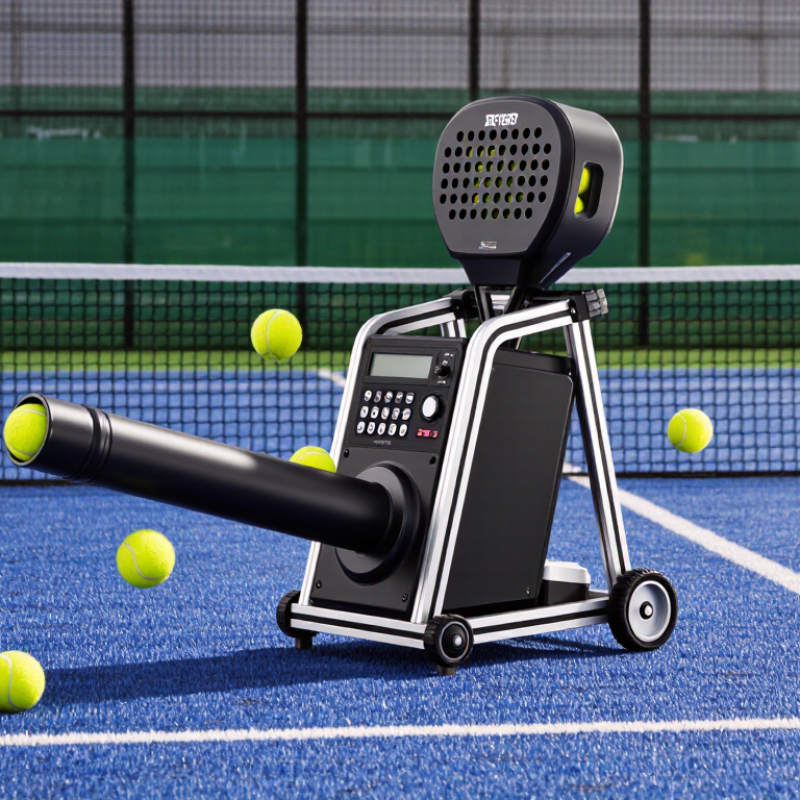
A Padel Shooting Machine is a training device that delivers repeatable balls across the court. It helps players practise volleys, lobs, bandejas, smashes, and defensive returns without waiting for a partner. The machine can vary speed, height, spin, direction, and feeding intervals. That control creates a measurable practice environment. However, it does not recreate every match situation.
Jorge Martínez, a respected Spanish padel coach and coach educator, describes the principle clearly: “Technology can repeat the ball, but it cannot read the player.” His observation captures the machine’s real value. Players receive consistent repetitions, while coaches can focus on positioning, technique, and decision-making. A beginner may use slower feeds near the service line. An advanced player may face faster balls directed toward the back glass. Small adjustments matter.
The best results come from purposeful sessions, not endless repetition. A Padel Shooting Machine can reveal late preparation, unstable footwork, or a weak recovery step. It can also expose a training mistake: hitting many balls without understanding why. That weakness deserves attention. Players still need live rallies, communication, pressure, and unpredictable rebounds. The machine is helpful, but imperfect.
This guide explains how the equipment works, which features deserve attention, and where it fits into serious padel practice. It also considers portability, ball capacity, battery performance, safety, and maintenance. A reliable machine should feel practical beside the court, not impressive only in a product catalogue. The goal is simple: better repetitions, clearer feedback, and more intelligent training.
What Is a Padel Shooting Machine? Definition and Core Training Function
What Is a Padel Shooting Machine?
A padel shooting machine is an automated training device that feeds balls across the court. It can reproduce selected speeds, angles, heights, intervals, and sometimes spin. The player returns each ball without waiting for a partner to serve. This creates a controlled environment for practicing volleys, lobs, bandejas, smashes, and defensive rebounds.
Its core training function is repetition with measurable variation. A coach can set a medium-speed ball for ten forehand volleys, then change the feed toward the back glass. The player learns to adjust footwork, racket preparation, contact height, and recovery position. According to the International Padel Federation’s Global Padel Report 2024, padel has more than 30 million players worldwide and over 63,000 courts. Such growth increases demand for accessible, repeatable practice tools. However, participation data does not prove that machines alone improve match performance.
The machine has limits.
It cannot fully copy an opponent’s hesitation, disguise, or poor decision-making. I have also seen players chase repetition numbers and neglect court positioning. That is a training mistake.
Used carefully, the device supports technical learning, while coaching adds tactical judgment and safety oversight. Short drills work better than endless feeding. Players should record success rates, missed contacts, and recovery quality, then adjust one variable at a time. A quiet machine may expose rushed footwork more clearly than a friendly rally.
Official FIP Ball Standards: 56.0–59.4 g and 6.35–6.77 cm Diameter
What Is a Padel Shooting Machine?
Official FIP Ball Standards: 56.0–59.4 g and 6.35–6.77 cm Diameter
A padel shooting machine is a training device that delivers balls at controlled speeds, angles, and intervals. It helps players repeat volleys, lobs, smashes, and defensive shots without relying on a partner. Its value depends on consistent ball performance. That makes ball selection important.
Official FIP standards specify a ball weight between 56.0 and 59.4 grams. Its diameter must measure between 6.35 and 6.77 centimeters. These limits may look small, but they affect feeding accuracy and rebound behavior. A heavier ball can change the machine’s launch rhythm. A larger ball may produce different contact and bounce reactions.
A practical check is simple. Measure a sample first. Use a precise scale and caliper when possible. Also inspect the felt, pressure, and surface damage before training. A worn ball may meet the basic measurements but still behave poorly. The machine may continue firing normally, yet the exercise becomes less reliable. That result can mislead players.
In my view, coaches should record ball condition during repeated sessions. Small differences become noticeable after many feeds. Still, laboratory standards cannot copy every court situation. Humidity, temperature, and racket contact also influence performance. Reliable practice starts with compliant balls, careful measurements, and honest review of the setup.
Court Compatibility: Using the Machine on a 10 × 20 m Padel Court
What Is a Padel Shooting Machine?
Court Compatibility: Using the Machine on a 10 × 20 m Padel Court
A padel shooting machine feeds balls at controlled speeds, angles, and intervals. Its value depends heavily on court compatibility. The FIP Official Padel Rules define a standard court as 10 × 20 metres, enclosed by glass panels and metallic mesh. That space feels generous during play, but it becomes limited when adding equipment.
Position the machine outside the court whenever possible. The feed path must clear the net, side walls, and overhead mesh. A compact unit is more practical near the baseline, especially during volley and lob drills.
Operators should also check wheel movement, cable placement, and emergency stopping access. Real courts are less tidy than diagrams.
According to the FIP World Padel Report 2024, padel has grown beyond 25 million players globally. This growth increases demand for structured, repeatable training. However, higher ball speed is not automatically better. A machine should match the player’s level, court height, and drill purpose. FIP ball specifications also matter, since pressure and bounce affect feeding accuracy.
Tips: Test the lowest speed first. Mark the machine’s safe position with floor tape. Leave clear space behind the operator. Inspect glass, mesh, and lighting before every session. Keep sessions short at first.
One detail is easy to underestimate: rebounds change quickly inside a glass enclosure. A setting that works outdoors may feel too aggressive indoors. That requires adjustment, not guesswork. Coaches should record speed, launch angle, and recovery time, then refine the setup after each drill. Mistakes are useful data.
Training Applications, Safety Controls, and Player Performance Metrics
A padel shooting machine is an automated training device that feeds balls at selected speeds, angles, heights, and intervals. This repeatable delivery helps players rehearse volleys, lobs, bandejas, and defensive blocks without waiting for a partner. In practical coaching sessions, consistency is its strongest value. A machine does not read the match. It only repeats programmed patterns, sometimes too neatly.
Training should begin with low speed, wider targets, and generous recovery time. The operator must inspect the court, ball path, power connection, and machine position before use. Useful safety controls include emergency stops, remote shutdown, feed-delay settings, guarded moving parts, and visible warning signals. Players should maintain a clear distance from the feeder and avoid collecting balls while it is active. Supervision remains important, especially when children or beginners train. Equipment can fail, and that possibility should never be ignored.
Performance metrics turn repetition into useful evidence. Coaches can record successful returns, target accuracy, contact height, reaction time, and recovery position. Video may reveal a late split step that raw scores miss. Track results across several sessions, not one unusually strong day. A player may hit harder yet recover more slowly. That detail matters. Reliable testing uses the same court area, ball type, drill length, and rest period. Still, numbers cannot explain everything. Fatigue, confidence, and decision-making deserve discussion beside the statistics.