How to Choose the Best China PCB Maker?
Choosing the right China pcb maker can shape your product’s quality, schedule, and long-term cost. A polished website is not enough. You need evidence from the factory floor.
In my experience, reliable evaluation begins with a clear technical brief. Share your layer count, board dimensions, copper weight, surface finish, impedance requirements, and expected monthly volume. Then compare how each supplier responds. A capable pcb maker should ask precise questions about tolerances, drilling, materials, and assembly risks. Vague answers deserve attention.
Request recent sample boards and inspect their details. Look for clean solder masks, accurate holes, smooth edges, and consistent plating. Ask for manufacturing records, inspection reports, and material traceability. Certifications such as ISO 9001 and relevant IPC practices can support credibility, but certificates alone prove little. Audit the process when possible. Watch automated optical inspection, impedance testing, and final packaging. A trustworthy supplier will explain failures instead of hiding them.
Communication also matters. Test response times before placing an order. Ask who handles engineering changes and urgent production issues. Confirm lead times, minimum order quantities, payment terms, and corrective-action procedures in writing. A low quotation may conceal expensive rework or unstable delivery.
No checklist is perfect. Even experienced buyers can overlook cultural differences, unclear drawings, or changing material availability. Build a small trial order before committing to mass production. Review the results with your engineering team. The best choice is rarely the cheapest factory. It is the partner that consistently proves capability, communicates honestly, and improves when something goes wrong.
Map the PCB Market: China Produced About Half of Global PCB Output in 2023
China produced about half of the world’s PCB output in 2023, according to industry estimates. This scale creates strong capacity, but size alone cannot identify the best China PCB maker. A reliable supplier should show stable quality records, clear process controls, and experience with your board type. Ask about material traceability, impedance testing, layer registration, and inspection reports. Request recent samples, not only polished photographs.
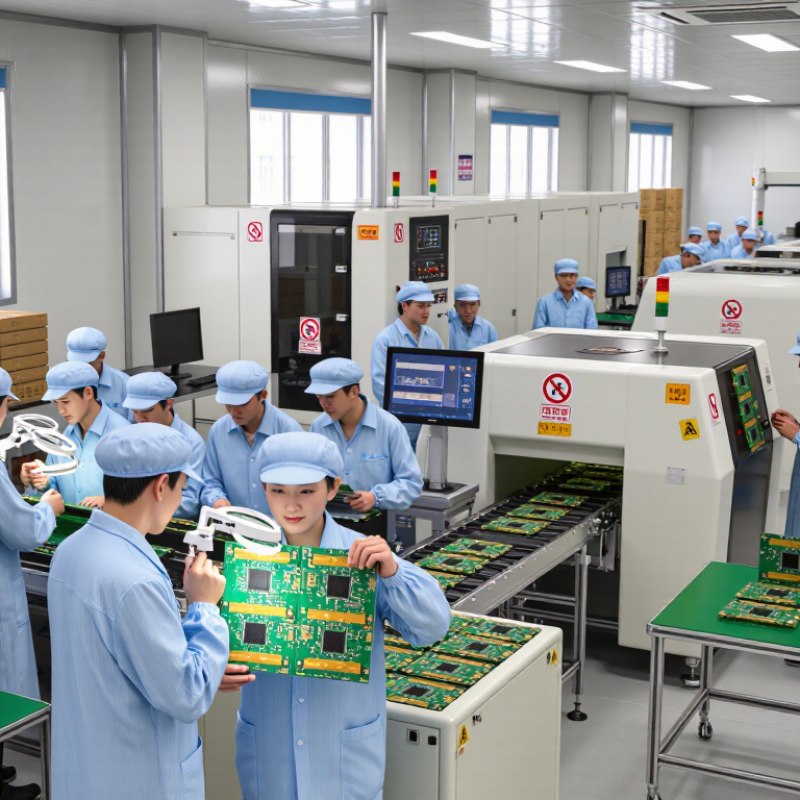
Visit the production area when possible. Observe storage conditions, cleanliness, testing equipment, and operator training. A professional maker should explain tolerances in practical language. It should also report defects honestly. No factory is perfect. A supplier that hides problems may create greater risks later. Check production capacity carefully, because impressive equipment does not always mean available capacity.
Tips: Compare at least three suppliers using the same technical file. Confirm prototype lead times, mass-production capacity, communication methods, and corrective-action procedures. Ask who approves engineering changes. Review certificates, but do not treat paperwork as proof of consistent performance. A small pilot order can reveal solderability, packaging quality, delivery discipline, and response speed. Keep written records of every revision. This step feels slow, yet it prevents expensive confusion. Some buyers focus too heavily on price. That habit deserves reconsideration. A cheaper board may require more inspection, rework, or delayed assembly.
How to Choose the Best China PCB Maker? - Map the PCB Market: China Produced About Half of Global PCB Output in 2023
| Market or Selection Dimension | Verified 2023 / Industry Reference Data | Why It Matters When Choosing a China PCB Maker | Recommended Verification |
|---|---|---|---|
| China's share of global PCB output | Approximately 50% of global PCB production in 2023. | China offers a broad supplier base, mature component ecosystems, and extensive manufacturing capacity across standard and advanced PCB categories. | Check whether the factory operates its own production lines or mainly outsources manufacturing. |
| Estimated global PCB market value | Approximately US$89 billion in 2023, based on widely cited industry market estimates. | The market includes rigid boards, flexible circuits, rigid-flex boards, and package substrates, each requiring different process capabilities. | Match the supplier's equipment and process portfolio with the exact board category required. |
| Board construction | Common rigid PCB constructions include 1–16 layers; high-layer-count boards require specialized lamination and registration control. | A supplier experienced in simple two-layer boards may not be suitable for high-density, high-layer-count, or impedance-controlled designs. | Request sample stack-ups, layer-registration capability, and cross-section reports. |
| Copper thickness | 1 oz copper is approximately 35 μm; 2 oz copper is approximately 70 μm before fabrication processing. | Copper weight affects current-carrying capacity, thermal performance, trace geometry, and etching difficulty. | Confirm finished copper thickness rather than only the starting foil thickness. |
| Base material | FR-4 is the most widely used rigid PCB material; standard FR-4 glass-transition temperature commonly falls around 130–180°C, depending on the grade. | Material selection influences thermal reliability, dimensional stability, signal integrity, and reflow performance. | Request the material datasheet, Tg, decomposition temperature, CTE, and dielectric data. |
| Fine-line and HDI capability | HDI production typically uses laser microvias, sequential lamination, and tighter registration controls than conventional multilayer fabrication. | Advanced mobile, automotive, medical, and high-speed products may require microvias, fine traces, and controlled impedance. | Review minimum trace/space, microvia diameter, via-fill method, and yield data for similar designs. |
| Surface finish | Common finishes include HASL, lead-free HASL, ENIG, immersion silver, and OSP. | The finish affects solderability, flatness, contact reliability, storage life, and cost. | Confirm finish thickness, nickel and gold specifications where applicable, and compliance documentation. |
| Quality and acceptance standards | IPC-A-600 defines visual acceptability requirements; IPC-6012 covers qualification and performance for rigid printed boards. | Using recognized standards creates measurable criteria for defects, workmanship, reliability, and inspection. | Specify the IPC class, inspection scope, electrical testing method, and documentation requirements in the purchase order. |
| Environmental compliance | EU RoHS restricts 10 substances, including lead, mercury, cadmium, hexavalent chromium, and certain flame retardants and phthalates. | Compliance is essential for products entering many international markets and for customer supply-chain audits. | Request a current RoHS declaration, material declaration, and relevant REACH information. |
| Electrical testing | Flying-probe testing is commonly used for prototypes and small batches; fixture-based testing is generally more efficient for repeat production. | The testing method affects setup cost, production speed, and defect coverage. | Confirm open/short testing coverage, test-point requirements, and whether a test fixture is included in the quotation. |
| Certification fit | ISO 9001 supports general quality management; IATF 16949 is associated with automotive quality systems; ISO 13485 is used for medical-device quality systems. | The required certification depends on the end-use market and customer audit requirements. | Verify certificate scope, issuing body, validity dates, and whether the certificate covers the actual manufacturing site. |
| Production timing | Prototype and small-batch lead times are commonly quoted in the range of several working days to a few weeks, depending on layer count, materials, finish, and testing. | A short quoted lead time is not useful if engineering review, material procurement, testing, or shipping is excluded. | Request a milestone-based schedule covering DFM review, material arrival, fabrication, testing, inspection, and delivery. |
Notes: Market figures are rounded industry estimates. Technical ranges are typical reference values and may vary by material system, product class, design rules, and applicable standards.